Specialist Spotlight: Annabelle Davis CEnvP-HER
27 March 2025Reconciling Personal Morals with Professional Ethics
8 September 2025The CEnvP Scheme is powered by the work of its expert volunteers, including Specialist Environmental Advisory Committee (SEAC) members who shape the standards and continuous improvement of a specialist certification.
In this regular series, we will be highlighting the Scheme’s specialist volunteers to share the work they do and celebrate their outgoing contributions. Here, we profile Scott Hanna, CEnvP Impact Assessment Specialist (CEnvP-IA) and member of the Impact Assessment (IA) SEAC.
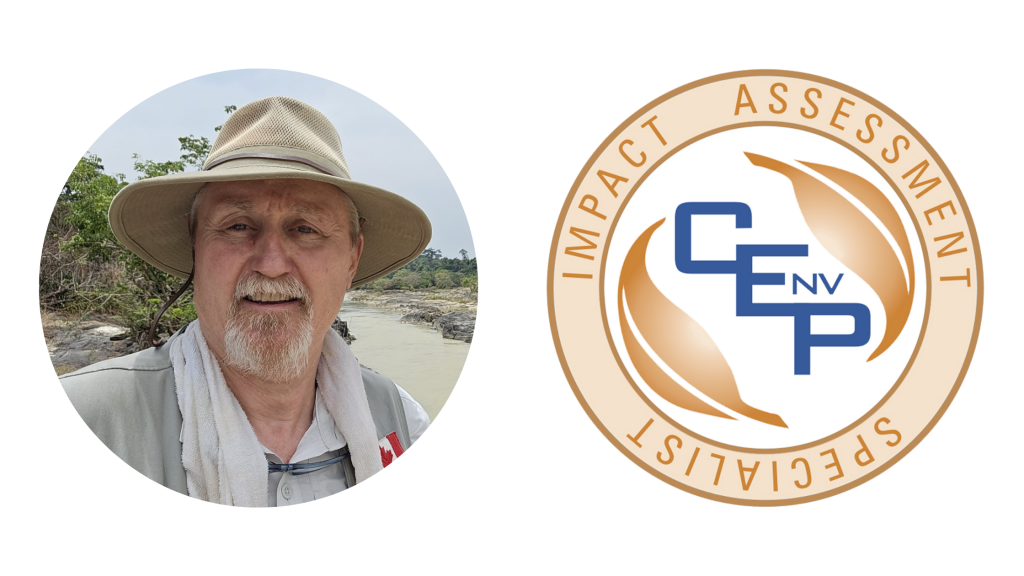
About Scott Hanna
Scott Hanna is a Fellow of the Environment Institute of Australia and New Zealand (FEIANZ), Certified Environmental Practitioner–Impact Assessment (CEnvP-IA), Registered Professional Biologist (British Columbia and Alberta, Canada), Adjunct Professor in the University of Queensland’s School of the Environment, and impact assessment specialist, with almost 50 years’ experience on large-scale energy and transportation infrastructure projects across the globe. Scott holds a Bachelor of Science degree in Biology and a Master’s degree in Natural Resources and Environmental Management.
Scott is passionate about the role that good science plays in impact assessment and guiding sound sustainable project development.
What inspired you to pursue a career in biology/impact assessment sector?
My father was a commercial banker, and an avid outdoorsman and conservationist, who never hesitated to pull me out of school when I was an adolescent to accompany him on inspections of large infrastructure projects, that were being financed by the lending institution with whom he worked all his career. Most of these were in the hinterland far from major population centres. These trips invariably involved a few days of hiking or fishing before returning home. His ability to have a business-focused career while pursuing environmental interests inspired me to complete degrees in biology and natural resource management with a view to having a career that took me out of the day-to-day office environment and into the field.
Tell us about your current role and what a typical workday looks like for you.
For the past number of years, up to and including the present, I have been working exclusively as a Senior Environmental and Social Safeguards Advisor for the World Bank, in the energy and extractives sector. This involves assessing environmental and social risks of mostly large-scale multipurpose hydropower/solar/irrigation projects in South Asia, Central Asia, and West and Central Africa. Given the time zone differences between my home on Canada’s west coast and various international project locations, my workday often begins with MS TEAMS video calls starting anywhere from 4:00am to 5:00am and often does not finish until sometime mid-evening (with breaks in between).
When not away on in-country missions, I spend considerable time reviewing and editing ESIA and related safeguards documents prepared by other consultants and undertaking capacity building of newly minted environmental professionals.
What does CEnvP certification mean for your career?
CEnvP certification has levelised the playing field in the business environment in which I find myself, one that is populated by a range of other highly qualified professionals . . . professional engineers, financial specialists, economists, lawyers, agronomists, forresters and others. Having the CEnvP certification means that these other professionals take notice of and accept the E&S advice and opinions I provide on project related matters.
Why did you become involved with the Impact Assessment SEAC?
Being a member of the SEAC-IA has allowed me to stay connected to other like-minded ESIA specialists and the wider IA community in Australia/New Zealand. It has, and continues to be, a great forum for staying abreast of IA related issues in the region and globally and exchange ideas and opinions, all in the interest of strengthening the IA role for CEnVP.
Do you have any advice for practitioners who are just starting out in the profession?
Spend as much time as you can out in the field early in your career. This will serve you well as you advance in your chosen field, as your field experiences will provide a considerable base of knowledge that you will need when managing projects and people, advising clients, reviewing project proposals, reviewing ESIAs, and defining project budget and staffing requirements.
Interested in joining the Impact Assessment SEAC? Becoming involved is an opportunity to shape the future of the specialisation while making valuable industry connections. CPD points apply!